
BLOG
Blog
Learn more about Evoke Development.

How Does Accuracy Training Work?
Learn how our unique training courses can save you money, increase productivity, and improve operational efficiency. Employees who complete our accuracy training typically reduce their errors by 59% and increase their processing speed by 7%. Once your organization commits to accuracy training, you can expect the following within this 7-hour course: Pre-Course Assessment which measures participants’…

Taking a Deeper Look at Errors
Like many companies, BTN, Inc. knew their employees were making far too many clerical errors and attempted to eradicate data entry errors at their source. Unfortunately, they made the incorrect assumption that such errors were nothing more than typos. Consequently, senior management established a quality department to find and report mistakes. Once notified that a particular…
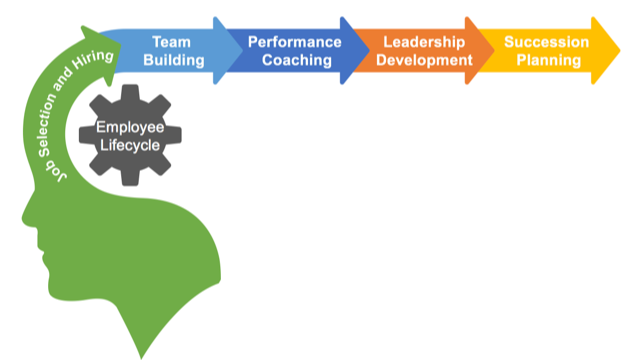
How Can Competencies Be Applied in a Work Setting?
In a work setting, competencies can be: Associated with recruitment and selection. Linked to the performance appraisal process and compensation strategy. Tied to training and development. Associated with succession planning. By linking competencies to the selection process, you can: Present a better overall depiction of the job and what it requires. Increase job-person fit by providing…

What Are Competencies?
Competencies are underlying characteristics that can predict a person’s behavior and performance in a variety of situations and job tasks, over time. Are there different types of competencies? There are two types of competencies: Threshold: basic-level competencies that individuals need to perform their jobs. Differentiating: competencies that separate average from above average performance. Why are competencies…

Why Do People Make Mistakes?
Most errors happen in the perceptual or visual aspect of working with data. It is not a keying error – or a slip of the fingers – that makes $369.23 turn into $396.23. The problem lies in how we look at and read the data. Between our eyes and our brain, the 6 and 9 are…